What Does Ethos Mean for Riders and Coaches?
Mar 24, 2022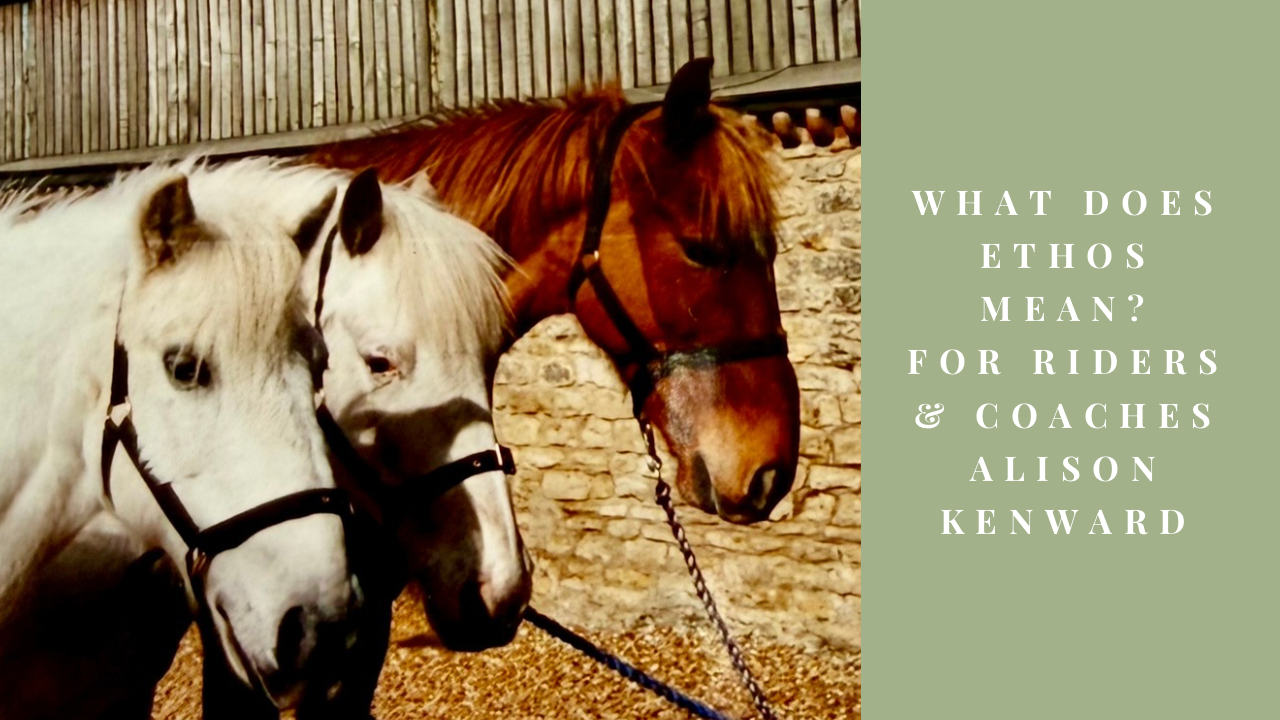
Ethos is one of those words we hear surprisingly often in equestrian sport. A coach may talk about their coaching ethos, a rider may choose a trainer or yard because their values feel aligned, and businesses use the word when they talk about what they stand for. But what does ethos actually mean?
When I first explored this in 2022, I was also thinking about personal branding and how the way we communicate our values shapes what other people understand about us. That led me back to three ideas from Aristotle — ethos, pathos and logos — and, naturally, I imagined them as three horses.
Ethos, pathos and logos come from Aristotle’s ideas about persuasion and communication. They give us three different ways to think about why we believe someone, connect with what they are saying and find their argument convincing.
That becomes interesting in the horse world because so much of what we do relies on trust, communication and learning. We make decisions about who we train with, whose advice we listen to and the environments in which we want to spend time with our horses. Coaches are communicating all the time too through what we teach, what we prioritise and how we respond to horse and rider.
When I first wrote about this, I pictured the three ideas as three horses:
- Ethos – credibility, character and values. Why do we trust someone?
- Pathos – emotion and connection. What makes something resonate with us?
- Logos – reasoning and evidence. What helps an idea make sense?
Ethos: The Horse of Trust
Ethos is about character and credibility. For a coach, that might include qualifications and experience, but it also lives in the way we coach: the values we demonstrate, the decisions we make and the relationship between what we say and what we do.
As riders, we experience other people's ethos too. It can influence whose advice we trust, who we want beside us when we're learning and the people we invite to become part of our horse's training and care.
Pathos: The Horse of Emotion
Pathos brings emotion into the conversation. Stories, experiences, humour and enthusiasm can all help an idea connect with us. In coaching, the way something is communicated can be as important to learning as the information itself. We remember moments, conversations and explanations that meant something to us.
Horses bring emotion into the conversation too. Our relationships with them, the experiences we share and how we feel about their progress and wellbeing all influence the way we think, learn and communicate.
Logos: The Horse of Logic
Logos brings reasoning and evidence. In coaching this might be the knowledge behind an explanation, the evidence that supports an approach or simply helping a rider understand why an exercise is useful and what they are noticing as they ride it.
Qualifications and experience have a place here, but so do curiosity, observation and the ability to explain an idea clearly enough for somebody else to think about it for themselves.
What Does This Have to Do With Personal Brand?
This was the question that first led me here in 2022. Personal branding can sound like a marketing exercise, but our values, the way we communicate and the knowledge we bring to our work are already telling people something about us.
For coaches in particular, ethos matters. What we become known for grows through our work with people and horses, the ideas we share and the way we behave when nobody is thinking about personal branding at all. Pathos and logos add other parts of the picture: how we connect and how well we can communicate the thinking behind what we do.
Perhaps that is why ethos is such an interesting word to explore. It can sound rather academic, yet we encounter it in very ordinary decisions around horses, who we listen to, who we learn from, what we value and what we want our own actions to say about us.
Author